

ADHD: Not Just a Lack of Focus: Understanding the ADHD Brain
Updated: 4 days ago
Ever had someone tell you to "just focus" or "try harder"?
Yeah. If only it were that simple.
If you're living with ADHD, or suspect you might be, you already know that focus isn't really the problem. Or at least, it's not the whole problem. Some days you can't concentrate on a simple email for five minutes. Other days? You'll spend six hours deep-diving into a random Wikipedia rabbit hole about 18th-century pirate ships without blinking.
So what gives?
Here's the thing: ADHD isn't about not being able to pay attention. It's about having a brain that's wired completely differently. And once you understand what's actually happening under the hood, a lot of the shame, frustration, and self-blame can finally start to lift.
Let's talk about your brain.
The "Lazy" Myth Needs to Die
Let's get one thing straight: ADHD is a real, measurable, medical condition rooted in brain structure and chemistry. It's not a character flaw. It's not a lack of discipline. And it's definitely not something you can just "push through" with enough willpower.
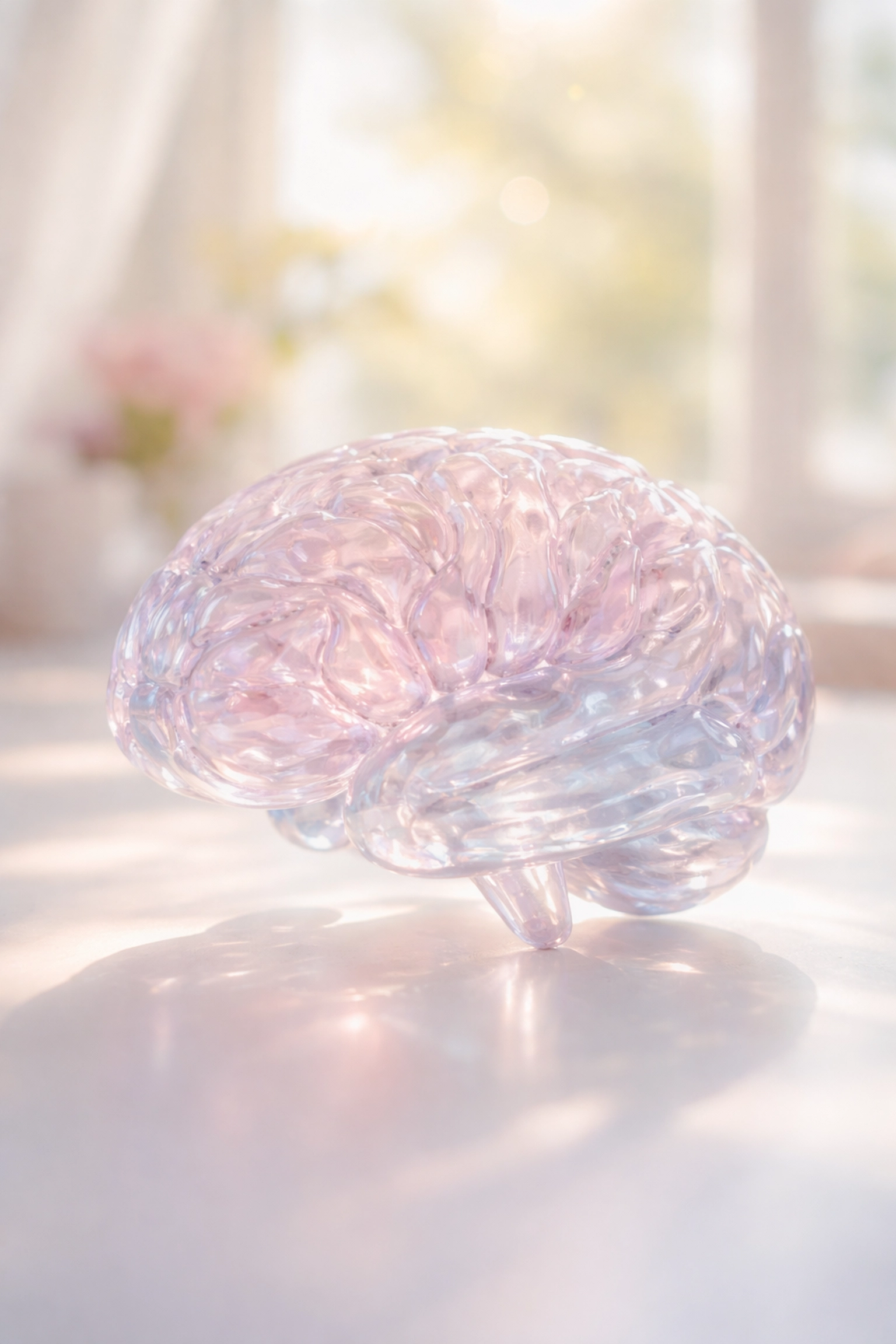
Research shows that people with ADHD have structural differences in key brain regions, particularly the prefrontal cortex (your brain's CEO), the basal ganglia (your behavior regulator), and the cerebellum. These areas are responsible for things like:
Decision-making and impulse control
Emotional regulation
Planning and organization
Time management
Working memory
When these regions develop differently or function differently, everything downstream is affected. That's why ADHD shows up in so many areas of life, not just homework or work tasks.
A Ferrari Engine with Bicycle Brakes
Here's a metaphor that might resonate:
The ADHD brain is like a high-performance racing engine... with bicycle brakes.
Your mind can go fast. Like, really fast. Ideas come rapid-fire. Creativity flows. You can make connections other people miss entirely. When something sparks your interest, you're unstoppable.
But slowing down? Switching gears? Stopping when you need to?
That's where things get tricky.
The brakes just don't have the same horsepower as the engine. So you end up in situations where you're mentally revving at full speed but can't seem to stop or redirect when life demands it. You stay up way too late on a project that grabbed your attention. You forget appointments. You interrupt people mid-sentence because if you don't say the thought right now, it'll vanish forever.
It's not that you don't care. It's that your brain is literally working with different equipment.
The Interest-Based Nervous System
Now here's where it gets really interesting.
Most people operate on what's called an importance-based nervous system. They can motivate themselves to do something because it's important, because there's a deadline, or because someone told them to.
But people with ADHD? They run on an interest-based nervous system.
Your brain doesn't respond to "you should do this" or "this is due tomorrow." It responds to:
Novelty – Is this new or stimulating?
Challenge – Is this engaging my problem-solving brain?
Urgency – Is there a fire I need to put out right now?
Passion – Do I genuinely care about this?
If a task doesn't hit one of those buttons, your brain basically files it under "meh" and moves on, even if you know it's important. Even if you desperately want to do it.
This explains so much, right? Why you can hyperfocus on video games but can't start a load of laundry. Why you wrote that essay at 2 a.m. the night before it was due, and it was actually pretty good. Why some days you feel like a genius and other days you feel completely broken.
You're not broken. Your brain just has different activation requirements.
The Dopamine Factor
Let's get a little nerdy for a second (in a fun way, I promise).
One of the core neurological factors in ADHD is an imbalance in dopamine and norepinephrine, the neurotransmitters that regulate focus, motivation, and reward. People with ADHD tend to have lower dopamine levels in the prefrontal cortex and other key areas.
What does that mean in real life?
It means your brain is constantly seeking stimulation to feel "normal." That scrolling habit? Dopamine. The impulsive online shopping? Dopamine. The way you need music or background noise to get anything done? Your brain hunting for dopamine.
It also means tasks that don't offer immediate rewards, like paperwork, cleaning, or meal planning, feel almost physically painful to start. Not because you're lazy, but because your brain literally isn't getting the chemical signal that says "this is worth doing."
This is why people with ADHD often thrive in high-pressure environments, creative fields, or roles with lots of variety. The stimulation is built-in.
More Than Just Focus
If you're living with ADHD in the York and Durham region, or anywhere, really, you've probably noticed that the symptoms go way beyond "trouble focusing." Here's what the ADHD experience can actually look like:
Emotional dysregulation: Big feelings that come on fast and hit hard. Rejection sensitivity. Getting overwhelmed by small frustrations.
Time blindness: Genuinely not sensing how much time has passed. Being chronically late even when you're trying your hardest.
Decision fatigue: Getting paralyzed by too many options. Avoiding simple choices because they feel monumental.
Memory gaps: Forgetting conversations, appointments, where you put your keys... again.
Inconsistency: Some days you're on fire. Other days you can barely get out of bed. And you never know which version of yourself is showing up.
Sound familiar?
The Hidden Gifts (Yes, There Are Some)
Here's the good news, and yes, there is good news.
That racing engine brain? It comes with some serious superpowers when you learn how to work with it instead of against it:
Creativity: ADHD brains make unexpected connections. You see patterns and possibilities others miss.
Hyperfocus: When you're locked in, you can achieve more in a few hours than most people do in a week.
Resilience: You've been adapting and problem-solving your whole life. That builds strength.
Energy and enthusiasm: When you're passionate about something, your energy is contagious.
Out-of-the-box thinking: Rules and conventions don't box you in the same way.
The key isn't to "fix" your ADHD brain. It's to understand it, build systems that support it, and stop measuring yourself against a neurotypical standard that was never designed for you.
You Don't Have to Figure This Out Alone
Living with ADHD can feel isolating: especially if you've spent years thinking something was "wrong" with you. Maybe you've masked your symptoms at work. Maybe you've internalized messages about being lazy or careless. Maybe you're only just starting to realize that ADHD might explain... a lot.
Whatever stage you're at, you deserve support that actually gets how your brain works.
At White Brick Therapy, we work with clients across the York and Durham region who are navigating ADHD: whether it's a new diagnosis, a lifelong struggle, or just a growing suspicion that things don't quite work the way they "should."
Therapy can help you:
Understand your unique brain wiring
Build practical strategies that actually stick
Work through the shame and frustration that often comes with ADHD
Develop self-compassion (because you deserve that too)
You don't need to have it all figured out before reaching out. That's literally what we're here for.
Ready to explore what support could look like for you?Meet our team and let's chat. No pressure, no judgment: just a conversation about what you need. 🤍
Virtual therapy Ontario
Online counselling Ontario
Online therapist Ontario
Stouffville therapist
York Region counselling
Couples counselling York Region
EMDR therapyEMDR for trauma
Addiction counselling
Trauma therapy
Anxiety treatment
Anxiety therapy near me
Teen therapy
Child therapist
OntarioCouples counselling


Comments